Hi Louis,
Good news and a time-critical warning. Your situation:
1. Split your transactions by date. Mastercard chargebacks via your bank have a ~120-day window from the transaction date. Deposits from June–August 2026 are still inside it — those go to your bank first, now. Anything from November 2025–spring 2026 is past the card scheme deadline; for those you use the acquirer route instead (formal complaints to the payment processors — much longer limitation periods).
2. The descriptors (interdersoft, langx, MRCR) are masked names — the real processors sit behind them. Ask your card issuer for the technical data per transaction (ARN, acquirer company name, MCC) via a GDPR Art. 15 request in writing. That tells you exactly who to address.
3. The crypto part. If some deposits ended at crypto platforms, mark them separately — value converted to crypto is practically unrecoverable. Focus on the euro-denominated card payments.
4. Be careful with ongoing casino contact. Don't promise them anything and don't accept "goodwill" partial offers in exchange for dropping complaints — it can complicate the formal claims. Keep everything in writing.
Order of action:
1. This week: chargeback request to your bank for all transactions younger than ~120 days (services not received / account balance you couldn't withdraw — describe what actually happened)
2. Same week: GDPR Art. 15 request to your issuer for ARN/acquirer/MCC data
3. When the data arrives: formal complaints to each identified acquirer for ALL transactions, including the old ones
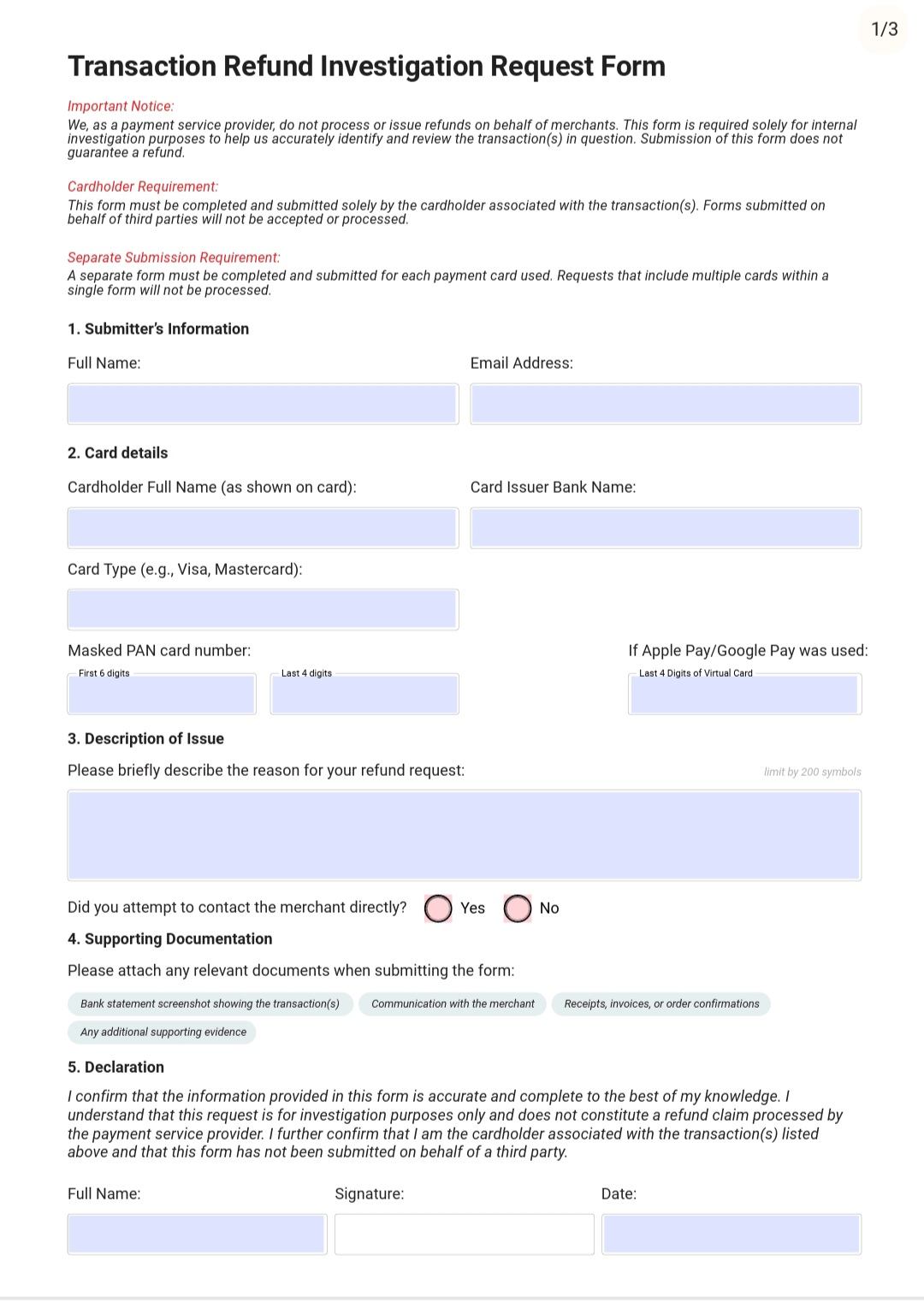
Tool tip for the paperwork: you can use Genspark to draft the documents. Upload the TRI form(s) and your transaction information, and it can produce a professional TRI form plus a formal complaint letter to the acquirer (e.g. Walletto) — that's how I prepared mine.
What exactly happened with your balance — rejected withdrawals? Blocked account? That detail decides which arguments are strongest for you.
Automatisk oversættelse: